

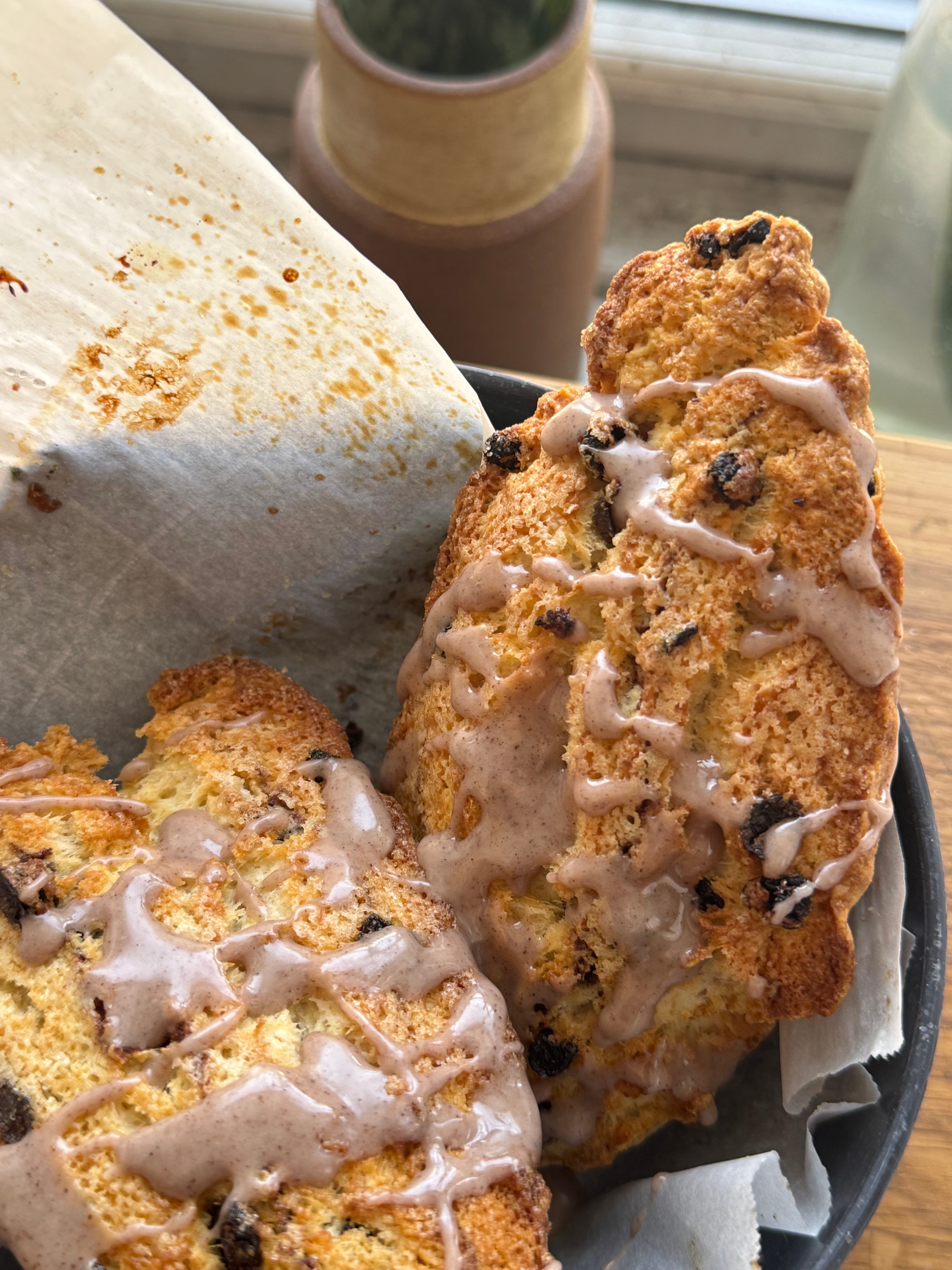
It’s light with a slight chew, packed-in layers and crispy edges.
Subtly sweet, aromatic… the kind of bite that keeps your mouth watering
Scones are old school and should be made by hand.
They require a bit of precision and high quality ingredients.
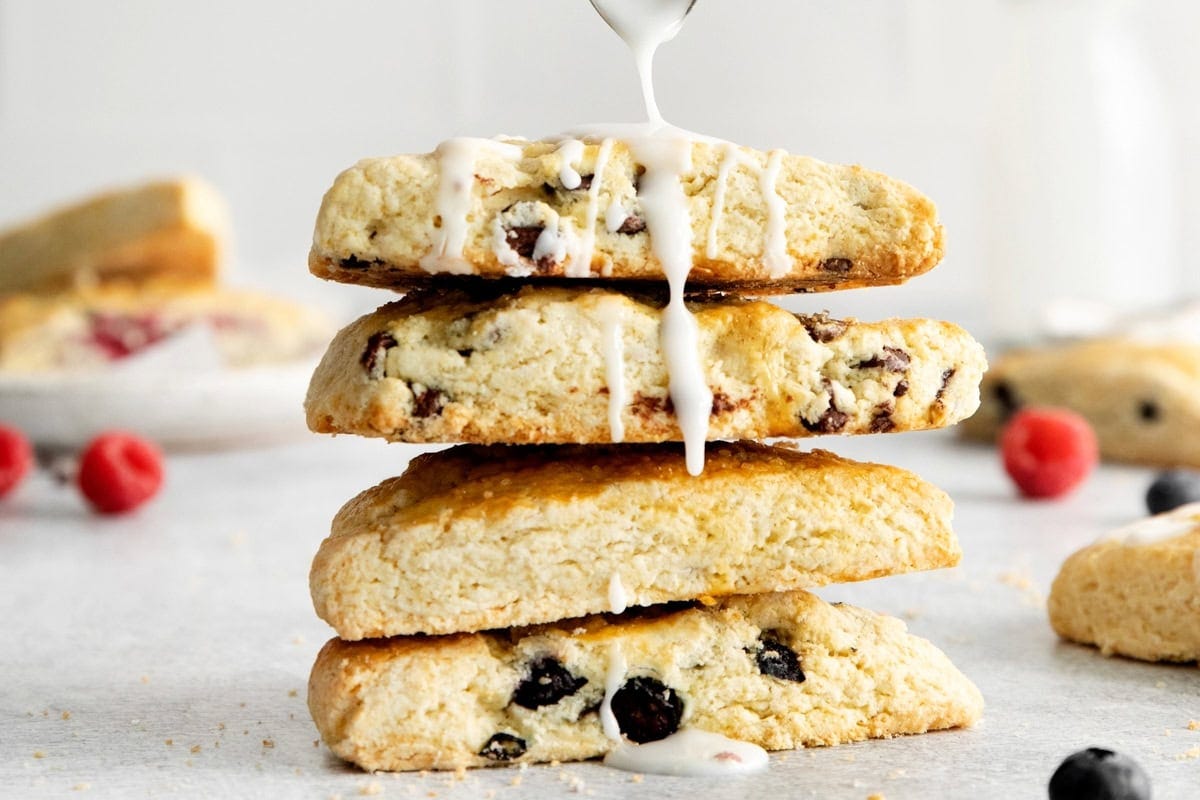
American scones are basically a thick, soft, fluffy yet dense cookie.
They lean too sweet and lack romance.
No distinct layers.
Just cheap vanilla and sugar doing all the work.
vs
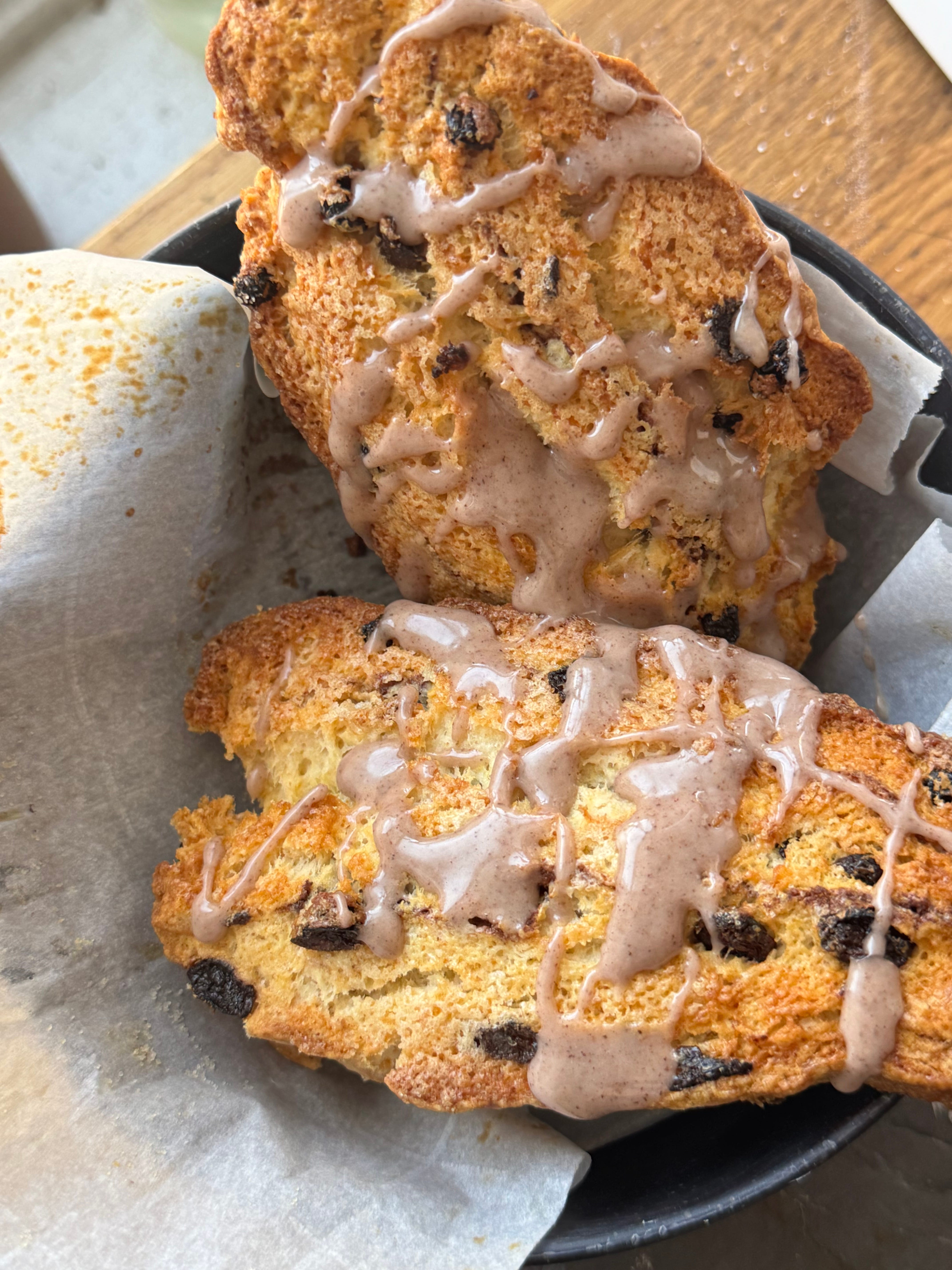
I’ve spent weeks tweaking my restaurant scone recipes into something that actually works at home.
And although I wasn’t surprised to adjust this multiple times,
trying to teach finesse ain’t an easy task.
You can’t just read a recipe like this and expect it to work perfectly.
You gotta feel it.
I’m sharing some tricks I’ve only shown maybe 3 people in my entire career.
👉 If you’ve ever eatin a scone and thought
“this kinda sucks”
you’re in the right place.
Building Flavor
A distinct element of a great scone is depth of flavor.
Aromatics bring scones to life.
Quality ingredients build the backbone.
Essential oils, herbs and spices elevate flavor, let you pull back on sugar, and keep you coming back for another bite.
Go light. A little goes a long way.
Nobody wants a mouthful of rosemary or lemon oil.
Always use good vanilla paste, high quality butter and fresh spices.
Oh, and make sure there is NO alcohol in the “essence” you use- only clean and natural.
Fruit
This part gets overlooked… and it shouldn’t.
Fresh, frozen and dried all work—but they behave very differently.
Frozen Fruit
I lean frozen most of the time.
It’s consistent. Cost stays stable. Quality is predictable.
They hold their shape when mixing.
Work quick, toss them in flour, and adjust your cream slightly—
they settle into the dough and burst in the oven instead of in your bowl.
Dried Fruit
Probably the most foolproof.
You get pops of chewy, slightly crunchy, concentrated sweetness.
One of my all-time favorites:
candied orange peel + rosemary, brushed with honey that caramelizes into crispy, lacy edges.
That’s the kind of bite I’m chasing.
Fresh Fruit
When it’s in season, it’s beautiful.
But it’s delicate.
It breaks, bleeds, and adds more moisture than you think—which can throw your dough off fast.
If you’re new:
start with dried
move to frozen
then try fresh when you understand the dough
👉 Next post I’ll break down some serious professional techniques like exactly how fruit changes your dough—and how to control it instead of guessing.
The Gluten Free Scone
I didn’t want to just teach another gluten free scone.
You can find those anywhere.
Most are fine.
Few are great.
I wanted texture.
I wanted character.
I went down a bit of a rabbit hole on this one—
and I’ll share what actually worked.
And for the first time, I’m bringing in someone I consider a master of gluten free baking:
Sixteen Mill
I spoke with Talia Tutak about her process.
She spent nearly two years dialing in a vegan, refined sugar free, gluten free scone that eats like a red pepper cheddar scone… without either.
It’s amazing.
That full breakdown drops next Friday.
👉 If gluten free baking has ever frustrated you, don’t miss this next one.
My Biggest Secrets
When I built this recipe, I wasn’t chasing tradition.
I wanted the perfect bite.
Something with:
the lightness of a biscuit
the richness of a cream scone
and just enough chew to keep you entertained
My biggest complaint about most scones:
They’re too wet.
They’re too sweet.
Sugar is easy to adjust.
Dough consistency is what separates a great scone from an average one.
